Your website has 5 seconds

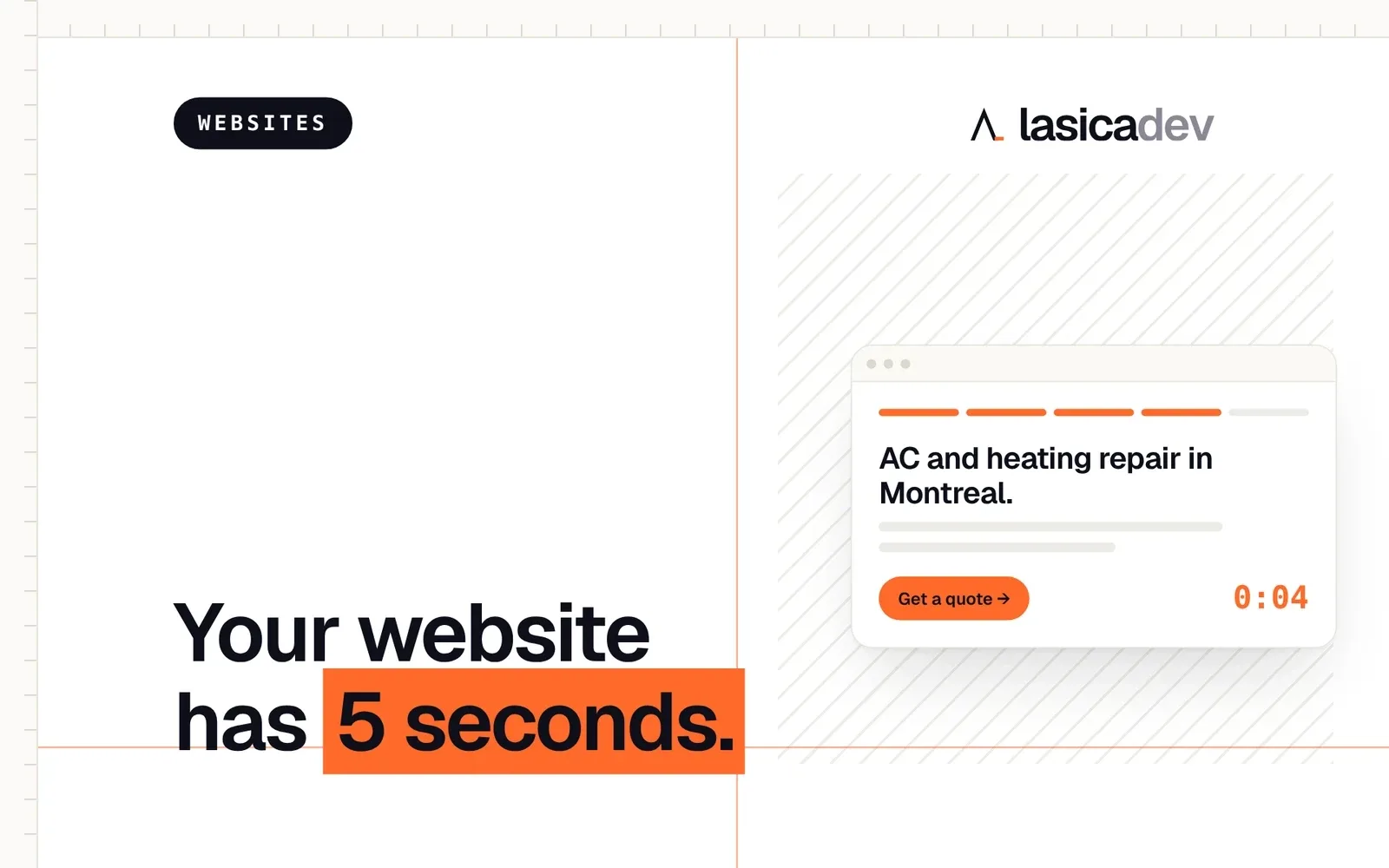
Someone lands on your homepage. Before they read a single paragraph, they’ve already decided whether to stay. It takes about five seconds.
In those five seconds, every visitor silently asks four questions:
- Where am I?
- Is this for me?
- Can I trust you?
- What do I do next?
Miss one and they’re gone. No email, no call, no second chance. You never even know they were there, because nobody fills out a form to tell you they’re leaving.
The good news: all four answers fit on the first screen. Here’s what each one needs.
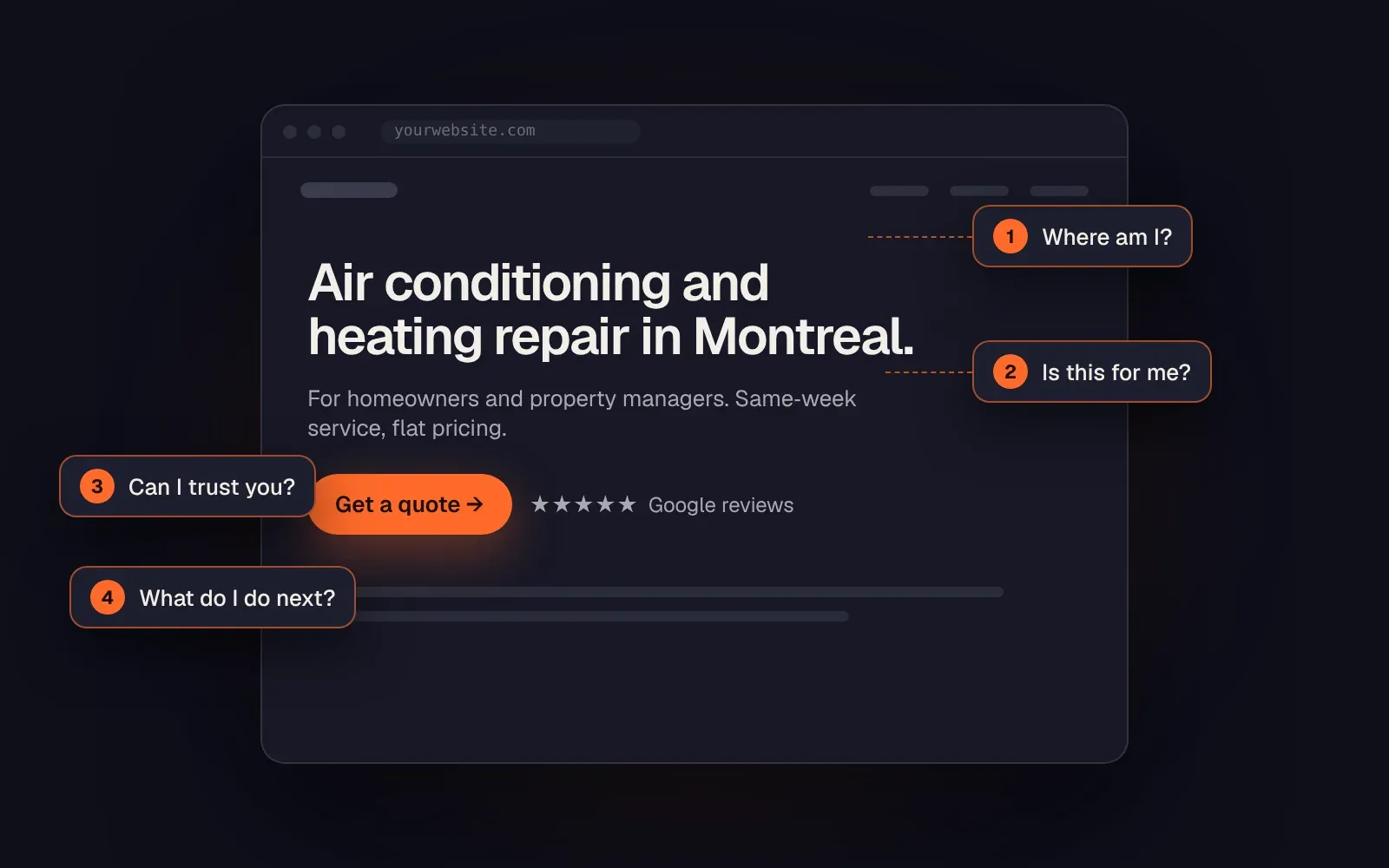
Where am I?
The first thing a visitor checks is whether they’re in the right place. Your headline has one job: say what you do, in the words your client would use.
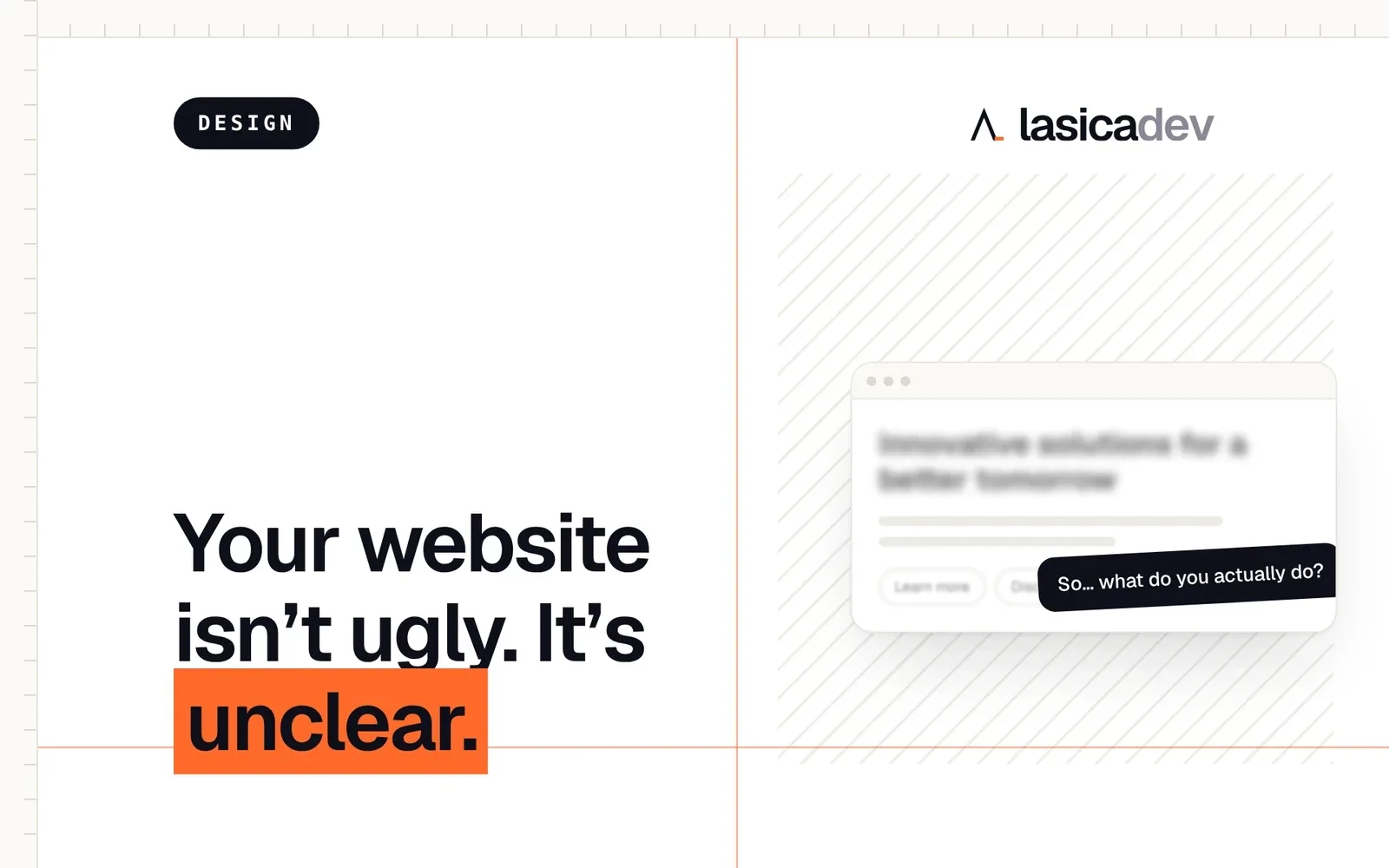
This is where most websites fail, and it’s not because the headline is ugly. It’s because it sounds nice and says nothing.
“Innovative solutions for a better tomorrow” could be a bank, a software company or a plumber. A visitor can’t tell, so they leave. “Air conditioning and heating repair in Montreal” leaves no doubt. It’s not poetic, and it doesn’t need to be.
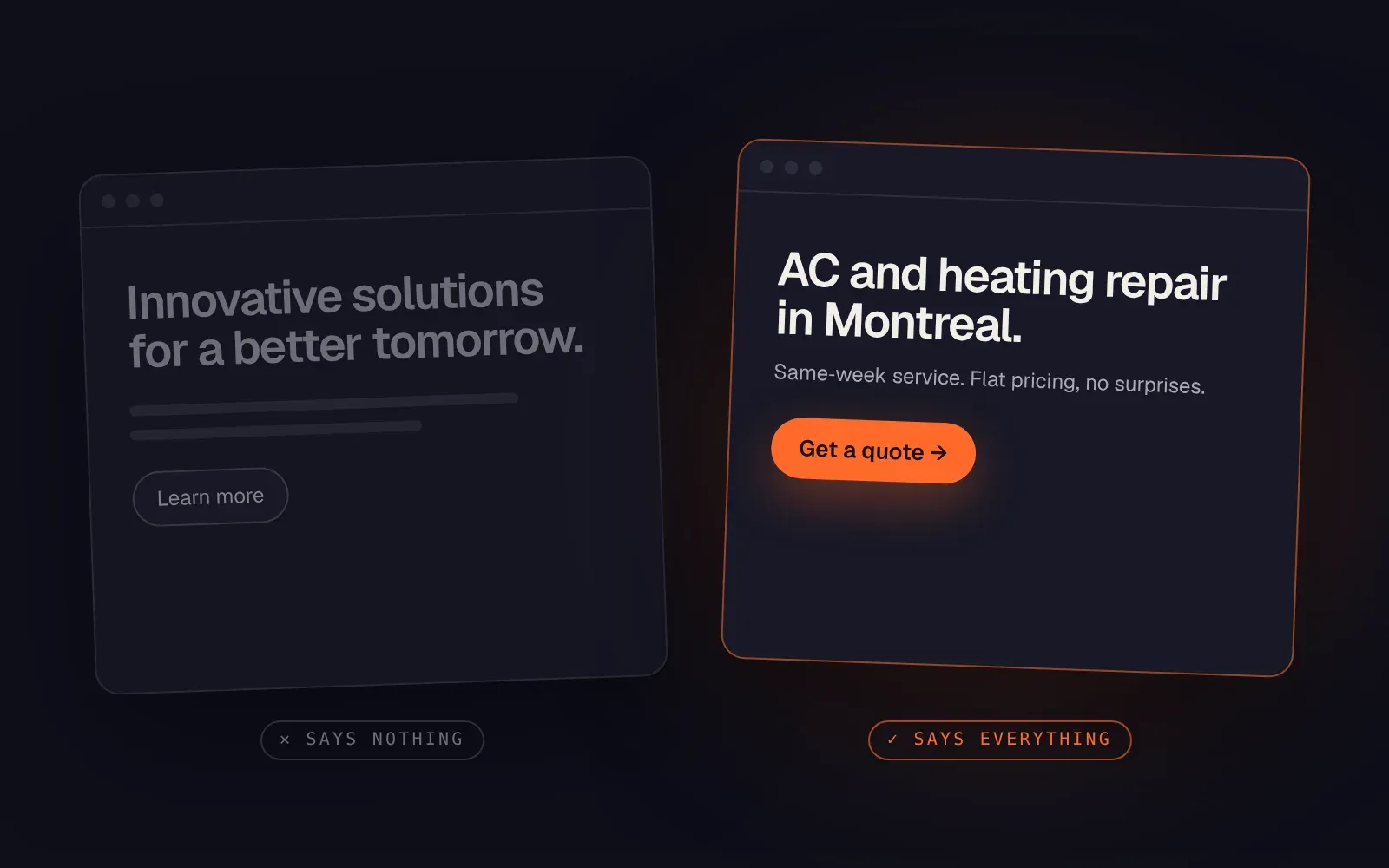
A quick test: cover your logo and show your homepage to someone who doesn’t know your business. If they can’t tell you what you do in one sentence, your headline isn’t doing its job.
Is this for me?
Once they know what you do, visitors look for themselves. A clinic owner wants to see clinics. A homeowner wants to see their neighbourhood. A restaurant owner wants to know you’ve worked with restaurants before.
So talk about who you help, not about yourself. The right visitor should read your headline and subheadline and think: “that’s me.”
That usually means getting specific, which feels scary. Business owners worry that naming one audience will push everyone else away. In practice it works the other way. When a page speaks to everyone, nobody feels spoken to. When it names the people it’s for, those people stay, and they’re the ones who were going to hire you anyway.
A few ways to say who it’s for:
- Name the client type. “For dental clinics”, “for property managers”, “for growing B2B teams”.
- Name the place. If you work locally, say the city in the headline or right under it.
- Name the problem. “Your books, done every month” speaks to someone who is behind on their books.
Can I trust you?
Now they’re interested, but interest isn’t trust. Before anyone gives you their email or phone number, they want a reason to believe you’re real and good at what you do.
You don’t need a wall of logos for this. One strong signal near the top does more than ten buried at the bottom of the page. That signal can be:
- a short review from a real client, with their name
- your Google rating, if it’s good
- logos of clients people will recognise
- a real photo of you or your team, not a stock photo of people shaking hands
The key word is near the top. Most sites have reviews, but they sit in the footer where nobody scrolls. Move one up, next to your button, so trust is there at the exact moment someone is deciding whether to click.
What do I do next?
The last question is the one that actually makes you money. The visitor knows what you do, knows it’s for them, and believes you. Now what?
Give them one clear button. Not three, not a menu of options. “Book a call”, “Get a quote” or “Request an appointment”, whichever is the real next step for your business.
When a page offers “Learn more”, “Explore”, “Discover” and “Get started” all at once, the visitor has to make a decision they didn’t come to make. Most of them choose the easiest option, which is closing the tab.
One more thing: the button should say what happens when you click it. “Submit” tells people nothing. “Get a free quote” tells them exactly what they get.
The fix isn’t a prettier site
When a website doesn’t bring in clients, the instinct is to redesign it. New colours, new fonts, new photos. Sometimes that helps. Most of the time it just makes the same confusion look more expensive.
Start with the first screen instead. Check it against the four questions:
- Where am I? One headline that says what you do.
- Is this for me? One line that says who it’s for.
- Can I trust you? One proof point, near the top.
- What do I do next? One button that says what happens.
If your homepage answers all four in five seconds, everything below it gets read by people who already want to work with you. If it doesn’t, nothing below it matters, because nobody gets that far.
Which question does your homepage fail first? If you’re not sure, that’s usually the answer. Book a discovery call and we’ll go through it together.